Wasel
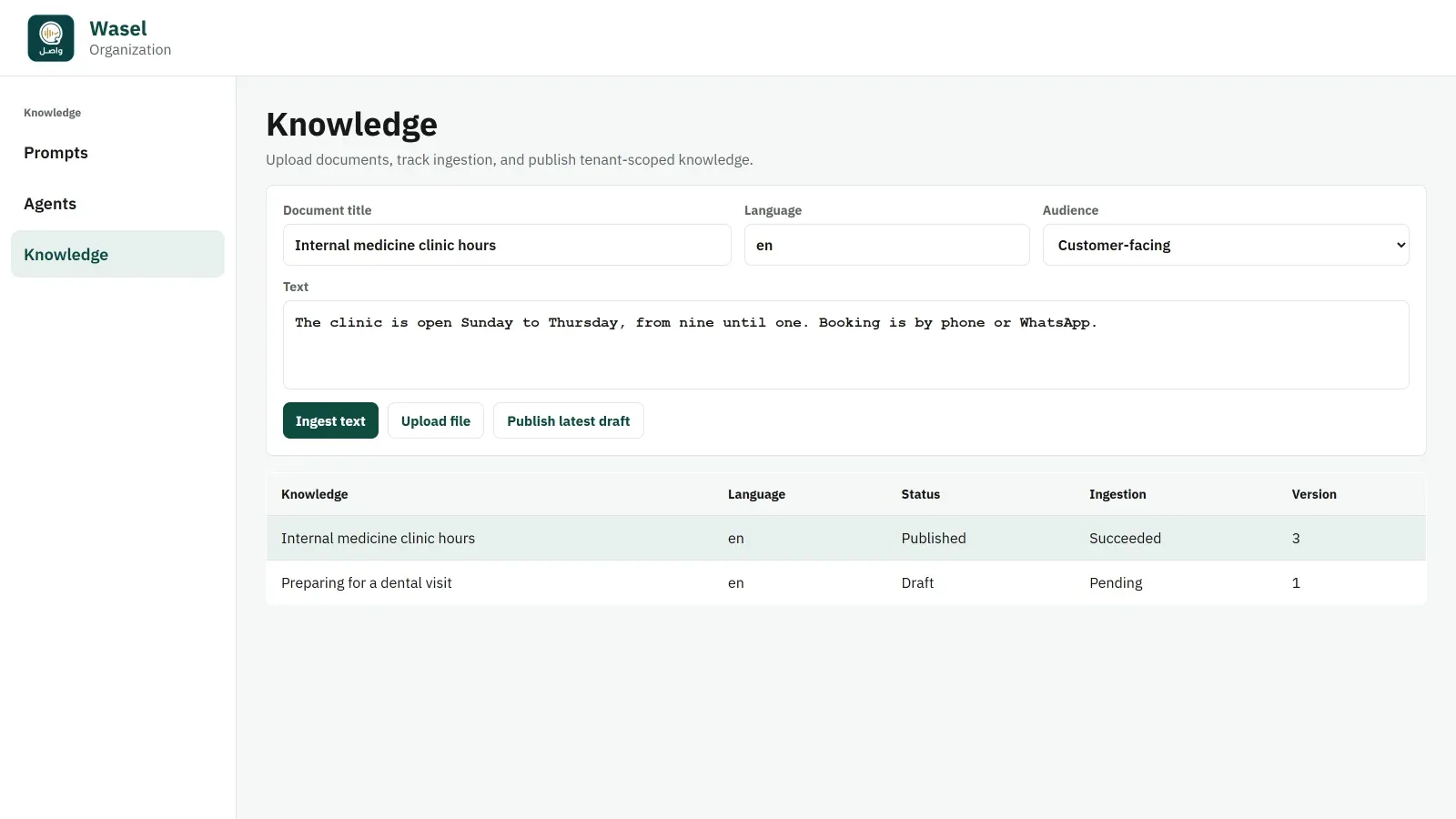
Staff write the internal-medicine hours as a customer-facing document, ingest the text, and publish the latest draft.
The published row keeps the title, the language, and the status. That passage is the one on the screen.
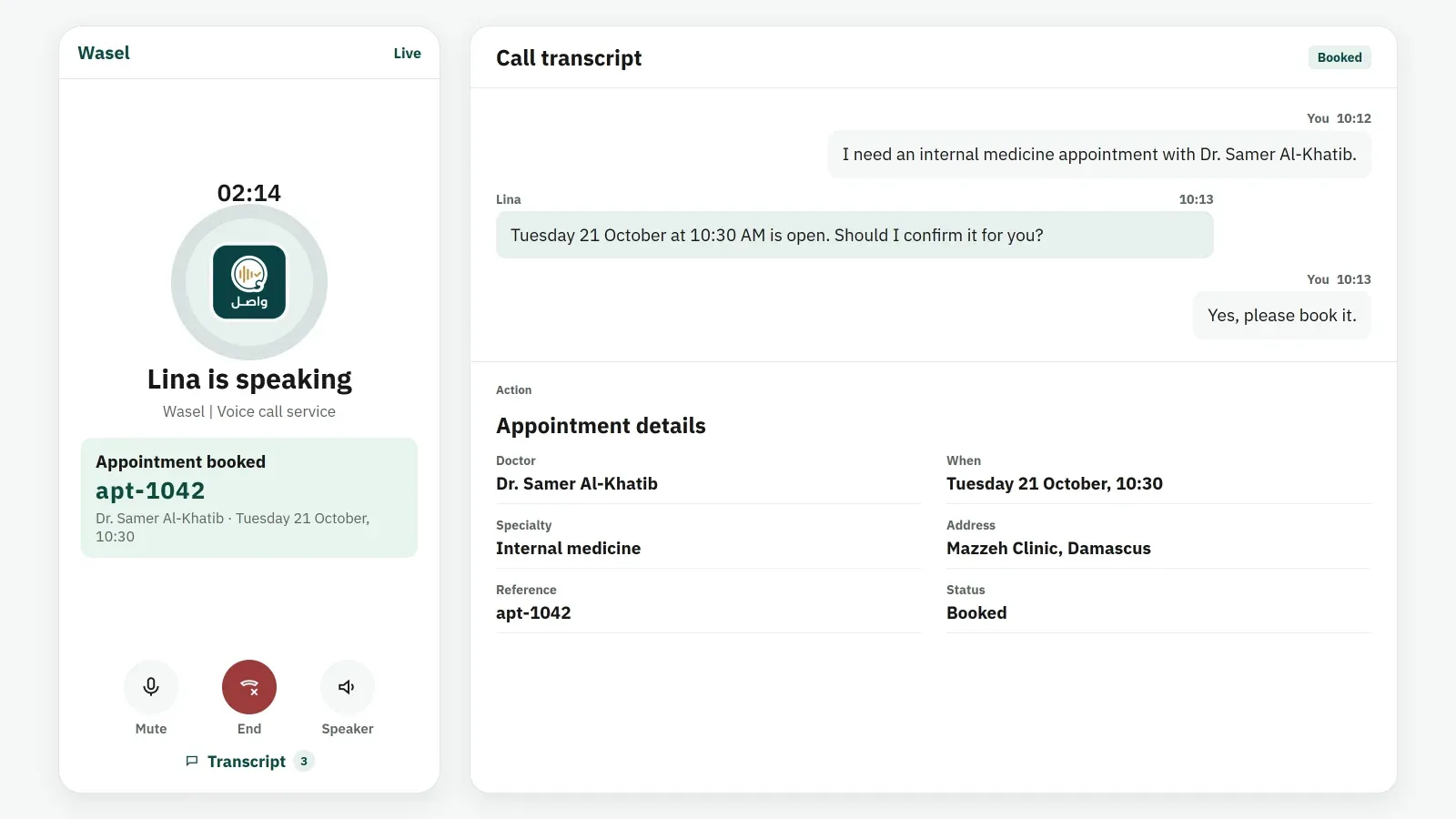
The caller speaks with Lina in Arabic on the Wasel line. During the call, the confirmed visit appears: the doctor, the specialty, and the time.
Mute, end, and speaker stay on the call, and the booking result remains on the same screen.
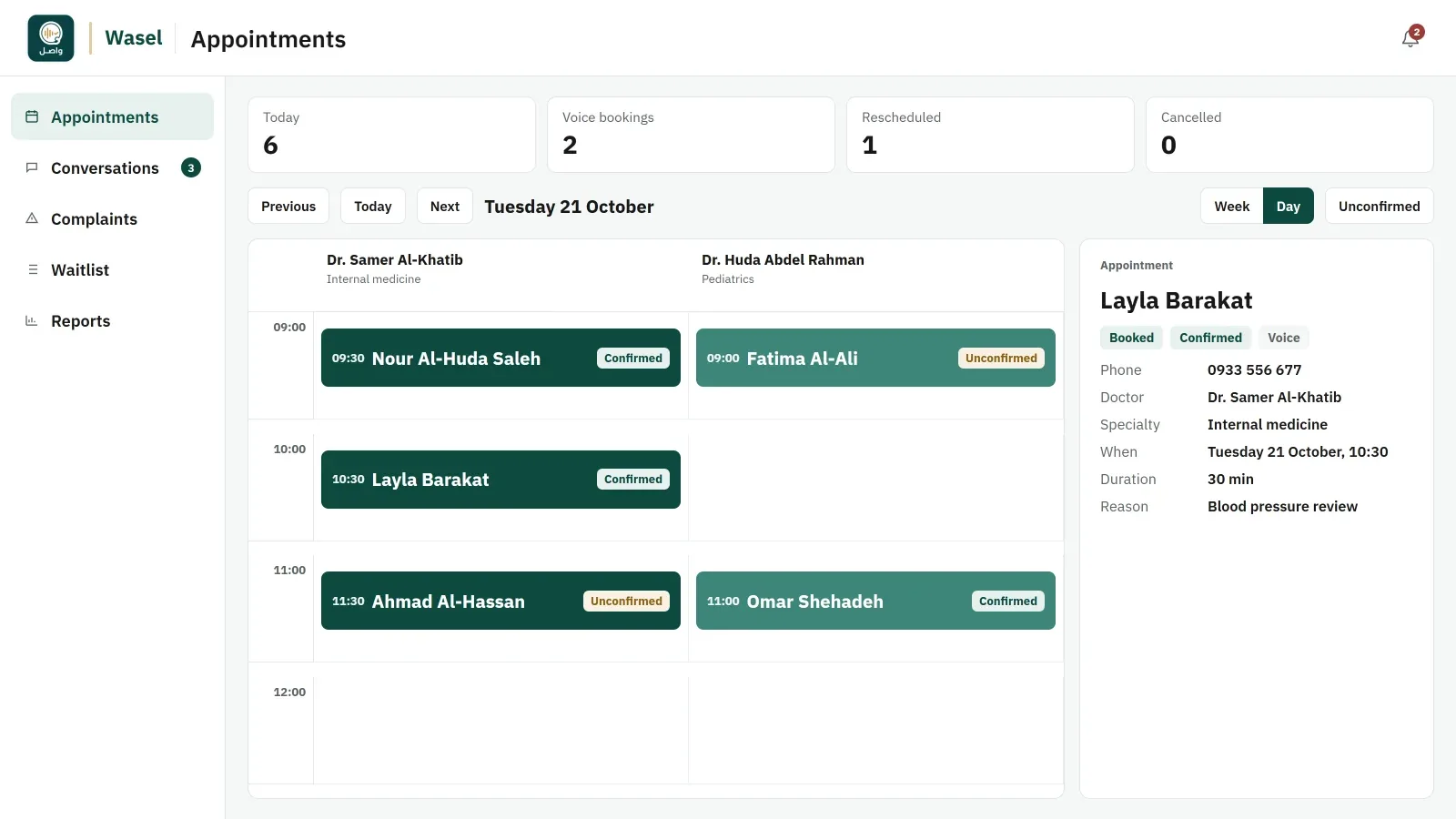
The appointments board shows the doctor’s day and the state of each visit: confirmed, unconfirmed, or booked by voice.
A voice booking sits on the same day as visits that still need confirmation.
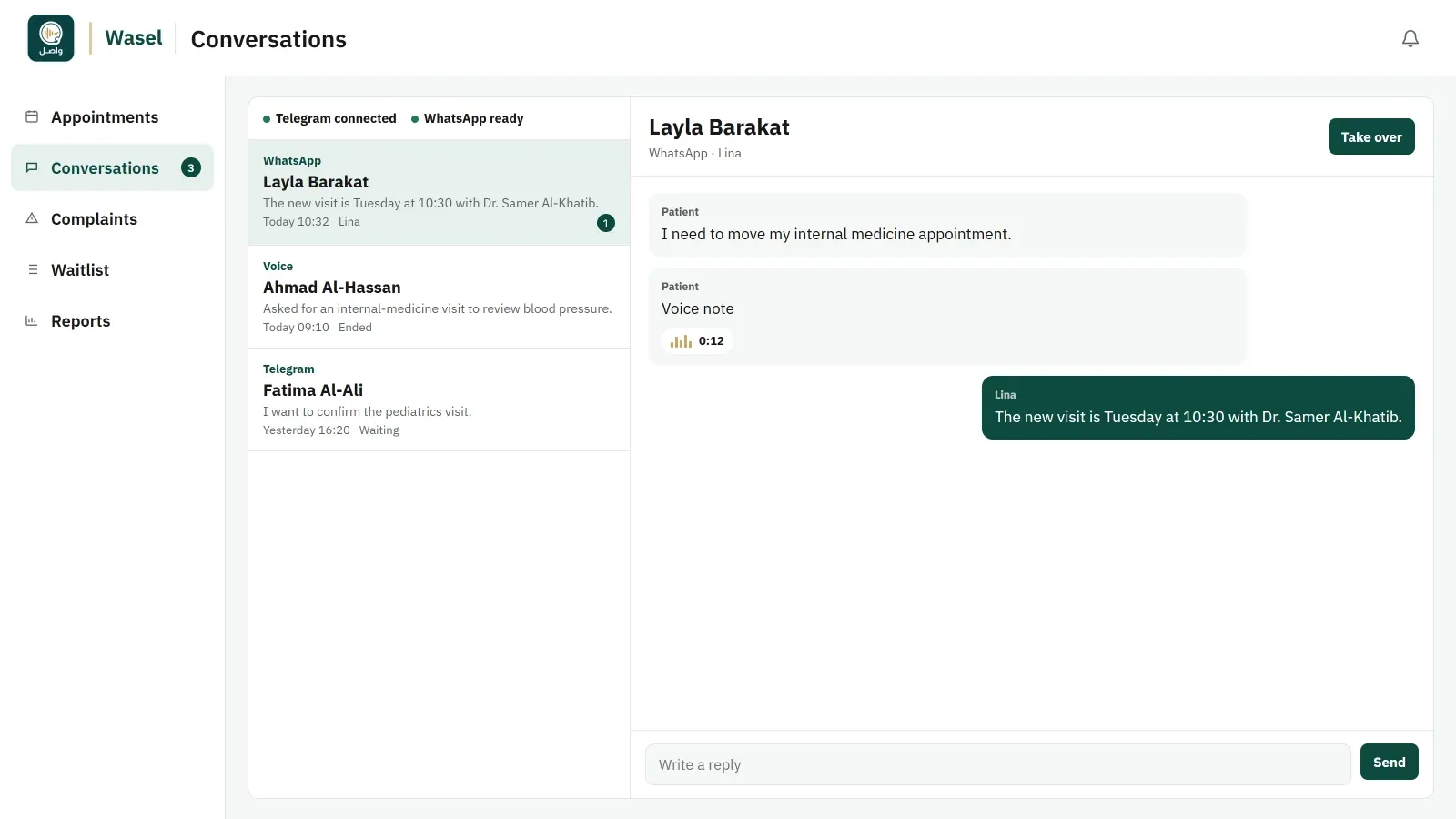
The caller’s message and voice note arrive in the same thread, and Lina replies with the new appointment time.
The inbox also carries voice and Telegram. The reply is written from the same conversation.
Staff write the internal-medicine hours as a customer-facing document, ingest the text, and publish the latest draft.
The published row keeps the title, the language, and the status. That passage is the one on the screen.
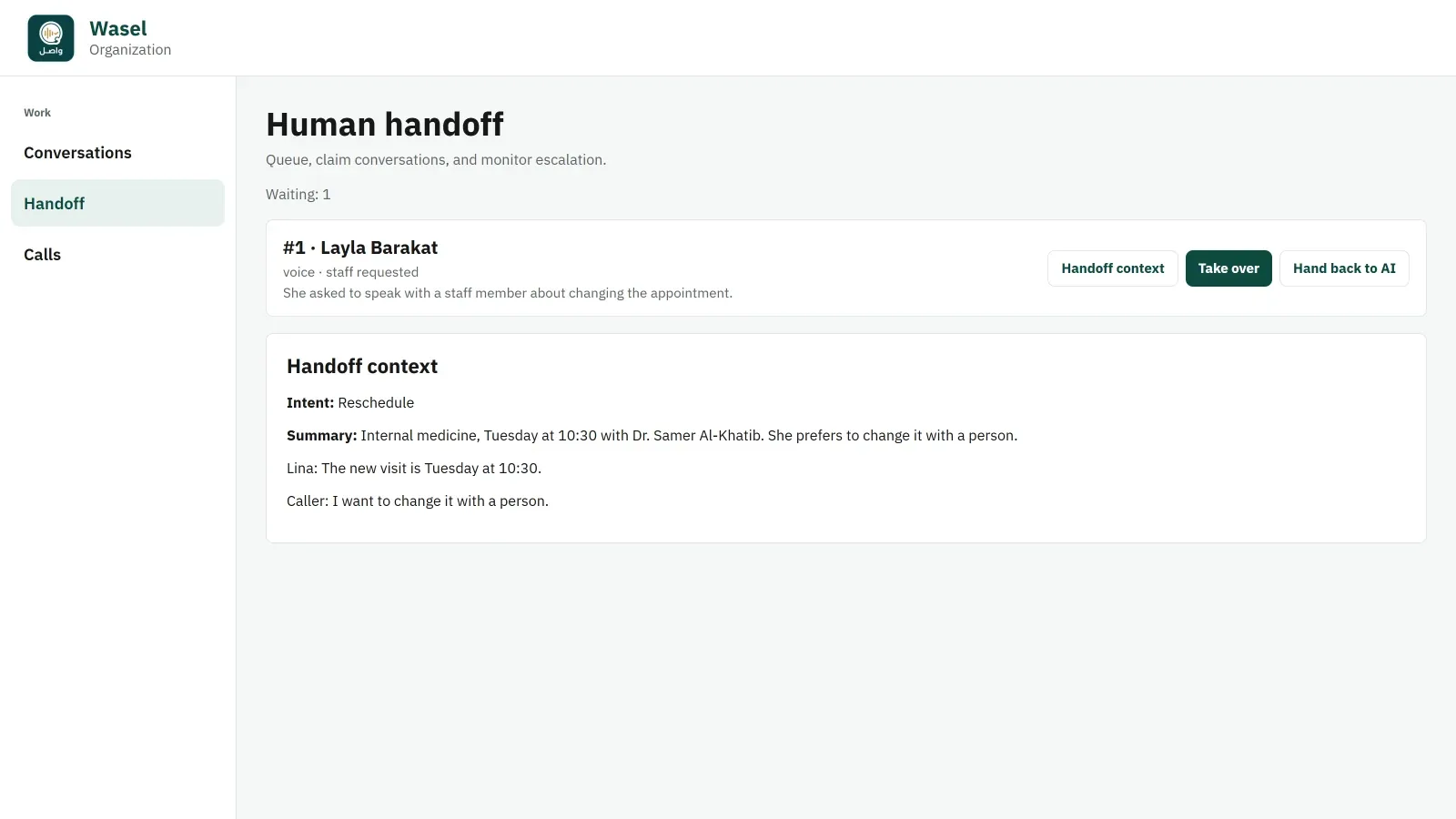
The handoff shows the caller’s name, the voice channel, the reason, and a summary of the visit Lina was handling.
Staff can open the handoff context, take over the conversation, or hand it back to the agent.
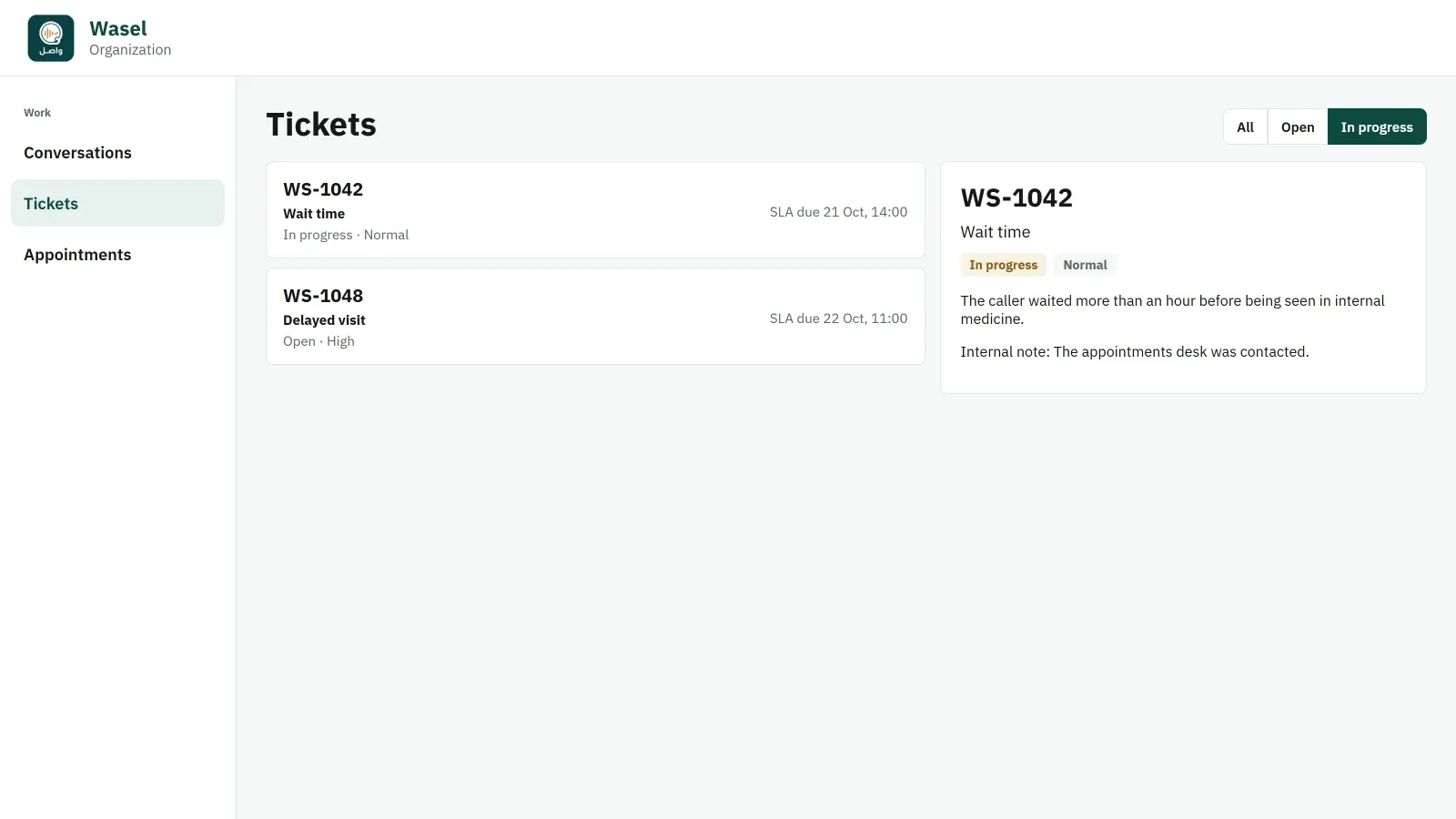
The wait-time ticket keeps reference WS-1042, status In progress, and priority Normal, with the due time beside it.
The internal note stays on the ticket: the appointments desk was contacted.
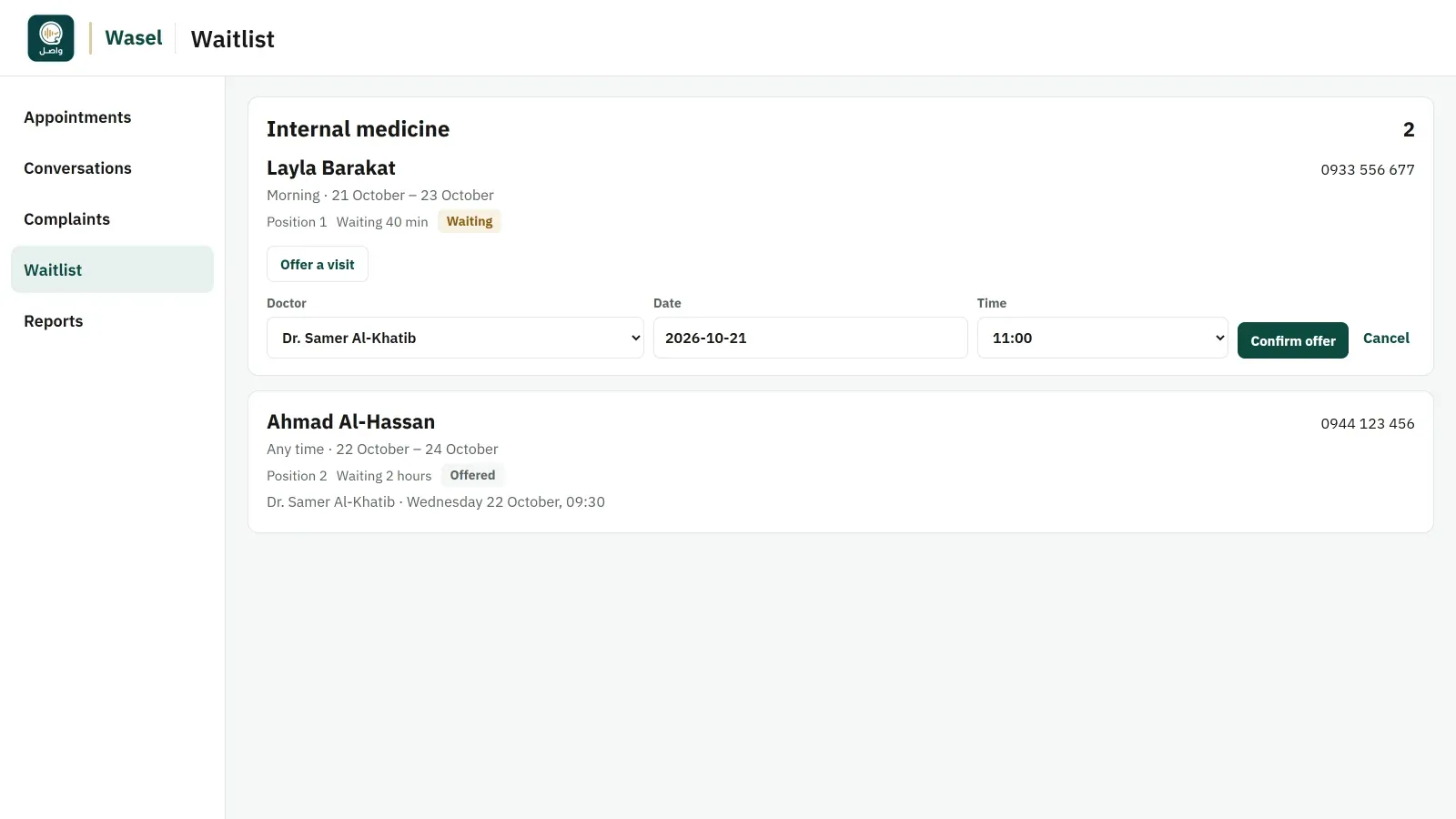
The waitlist keeps the first position, the morning preference, and the dates they can attend. Staff offer the freed visit from that entry.
The entry stays Waiting until the slot is offered. The offer uses the same list.